Loading...

Contact Us
info@metaverse-vr.co.za•Johannesburg, ZA
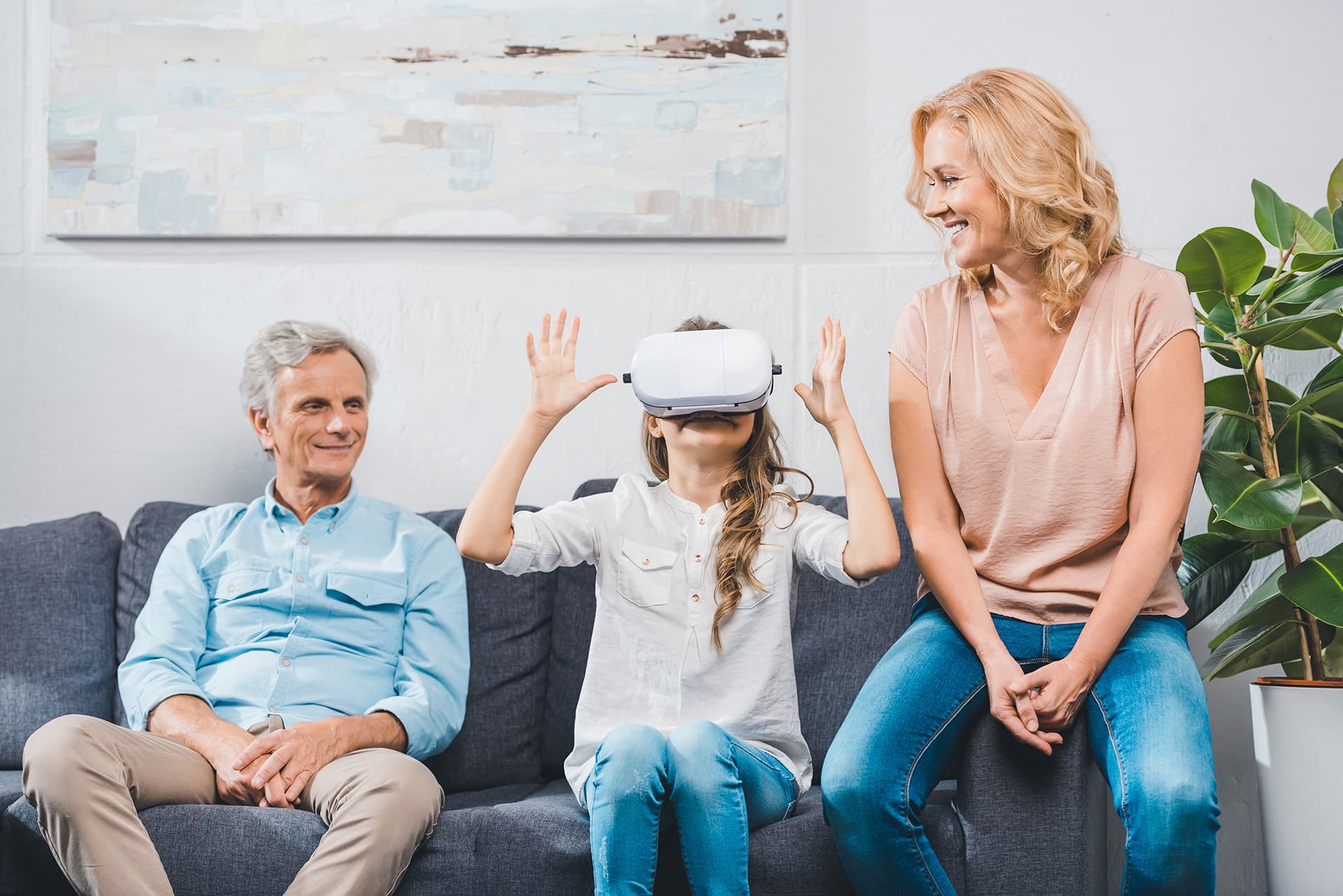
A clear, comprehensive breakdown of core virtual reality concepts, hardware mechanics, degrees of freedom (3DOF vs 6DOF), and immersive media formats.
Virtual reality (VR) is a technology that allows users to experience and interact with a computer-generated environment as if it were real.
This is achieved using a headset that covers the user's eyes and ears to provide a fully immersive visual and auditory experience. Sensors track head movements in real time, allowing users to look around in a natural way, while hand-held controllers enable intuitive interaction with 3D objects and menus.
A device covering the user's eyes and ears to deliver a fully immersive visual and auditory environment. It integrates high-refresh-rate displays and optical lenses with IMU sensors that track head movements in real time.
The psychological and sensory depth to which a user feels genuinely located within the simulated digital environment rather than the physical room.
The continuous tracking of user head rotation and orientation, automatically adjusting the rendered perspective with millisecond accuracy to mimic natural biological vision.
Devices enabling tactile interaction with virtual objects. They feature ergonomic triggers, grip buttons, joystick inputs, and precision haptic vibration motors.
The time delay between a user's physical movement and the updated display output. Low latency (under 20ms) is essential for maintaining comfort and eliminating simulator sickness.
Dynamic multi-directional sound processing that mimics real-world acoustics, allowing users to pinpoint where a sound originates in 3D virtual space as their head turns.
Degrees of freedom determine how much physical freedom and spatial tracking a VR system provides.
3DOF allows users to rotate their head in any direction (Pitch, Yaw, and Roll). However, users cannot physically lean, crouch, or walk through the environment.
Key Characteristics:
6DOF tracks both head rotation AND positional translation (Surge, Sway, and Heave). Users can walk around, duck behind cover, inspect objects closely, and move naturally.
Key Characteristics:
VR media encompasses a wide range of interactive, linear, and live experiential formats.
Interactive titles specifically engineered for VR headsets, allowing natural hand interactions, full spatial awareness, and intuitive physical mechanics.
Immersive cinematic productions leveraging 360° stereoscopic capture to place viewers directly inside the narrative world.
Non-game walkthroughs and simulations, ranging from museum preservation tours to digital twins of futuristic architectural masterplans.
Procedural simulations for science, aviation, mining, healthcare, and engineering that teach complex subjects in risk-free virtual setups.
Multi-user networked spaces where remote teams, students, and communities connect, converse with spatial audio, and collaborate via 3D avatars.
Real-world concerts, sports tournaments, and keynote conferences streamed live in 360° VR for global remote attendees.
360° video is captured using multiple synchronized camera lenses to record a full spherical field of view. The captured footage is stitched seamlessly into an equirectangular panoramic master.
Unlike traditional video, which forces viewers to watch a fixed rectangular frame, 360° video gives the audience control to explore any angle in real time, fostering genuine presence for tourism, training, events, and education.
From custom VR software and virtual events to 360 Video, Virtual Tours, 3D Modeling, and 3D Rendering — Metaverse VR turns your ideas into experiences people remember.